Campaign material, public experiences, official evidence, statistics, parliamentary scrutiny, reform proposals, videos, organisations and help routes concerning the Child Maintenance Service.
Right First Time UK · News, scrutiny and reform · Updated 17 October 2026
Latest Child Maintenance Service news and evidence
Recent reporting and Parliamentary evidence raise questions about historic system failures, the accuracy of assessments, shared care, appeals, affordability and how CMS handles complaints. The links below distinguish journalism and campaign opinion from official Parliamentary records.
Daily Mail · Link reviewed 17 October 2026 · Article date not independently confirmed
Former child-support workers raise concerns about glitches and a father's death
The report addresses allegations about historic agency systems and the experiences of families. It raises important questions about the investigation of errors and safeguarding. The full article could not be independently checked for this update, and no causal conclusion about a death is asserted.
Great British PAC · 15 October 2026 · Independent commentary
Calls for fundamental reform of child maintenance
The independent campaign argues that proposed changes to the income-change threshold do not address deeper concerns about shared care, calculations, affordability and transparency. Its views are not Government policy. RFTUK's own proposals remain separate.
House of Commons · Evidence published 14 October 2026
New evidence on shared care, appeals, costs and complaints
The Work and Pensions Committee published submissions from legal and research contributors and a summary of a briefing with CMS officials. These records inform scrutiny; publication does not mean the Committee has endorsed every submission.
Daily Mail · 17 August 2026 · Earlier investigation
Parents report disputed arrears, calculations and portal problems
Earlier reporting describes individual allegations of administrative and technical failures. These should be considered alongside the DWP response, official audit material and individual case evidence rather than assumed proven across the service.
Where a Paying Parent deliberately refuses to pay maintenance they legally owe, appropriate enforcement may be necessary.
Where a Receiving Parent deliberately provides false information to obtain maintenance they are not legally entitled to, appropriate action and enforcement should be taken.
Where CMS makes an error, there must also be a clear, timely route to correct the calculation, records and any resulting enforcement.
Source and accuracy note: News reports may contain allegations and personal testimony. Independent campaigns make proposals; Parliamentary evidence is not itself a judicial finding. RFTUK supports children receiving maintenance that is correctly and lawfully due.
36,000New CMS applications in the quarter to June 2026
£812.9mPublished cumulative unpaid maintenance figure since CMS began
CMS Statistics Update — Data to June 2026
Release date: 29 September 2026
The Department for Work and Pensions scheduled its quarterly Great Britain Child Maintenance Service statistics covering data to June 2026 for 29 September 2026. The comparison below records the June headline figures supplied for this update against the previous March 2026 official release.
Measure
March 2026
June 2026
Change
CMS arrangements
810,000
820,000
+10,000 (+1.2%)
Paying Parents
730,000
740,000
+10,000 (+1.4%)
New applications in quarter
38,000
36,000
−2,000 (−5.3%)
Direct Pay → Collect and Pay
12,000
11,000
−1,000 (−8.3%)
Not yet assigned to a service
13,000
14,000
+1,000 (+7.7%)
Direct Pay share
55%
55%
No percentage-point change
Collect and Pay share
43%
43%
No percentage-point change
Published cumulative unpaid maintenance
£791.2m
£812.9m
+£21.7m (+2.7%)
What changed between March and June?
The overall CMS caseload continued to grow: arrangements increased by about 10,000 and the number of Paying Parents increased by about 10,000.
Quarterly applications fell from 38,000 to 36,000.
The published service split remained 55% Direct Pay and 43% Collect and Pay.
11,000 arrangements moved from Direct Pay to Collect and Pay during the June quarter, down from 12,000 in the March quarter.
Arrangements not yet assigned to a service increased from 13,000 to 14,000.
The published cumulative unpaid-maintenance figure rose from £791.2 million to £812.9 million — a £21.7 million increase between the two published totals. Because cumulative statistics can be revised, this should not automatically be treated as £21.7 million of newly-created arrears without checking the underlying national tables and revision notes.
Source-check note: the March figures above have been independently checked against the DWP's published March 2026 release. At the time this file was prepared on 29 September 2026, GOV.UK confirmed the June 2026 release for 9:30am today, but its full June publication page and national tables had not yet become retrievable through the searchable GOV.UK index available to this update. The June figures shown here should therefore be cross-checked against the full DWP June release as soon as that publication page is visible.
Child Maintenance Service Latest News & Scrutiny Hub
News reports, official statistics, parliamentary debates, reform announcements and public-interest scrutiny relating to the UK Child Maintenance Service.
Last updated: 29 September 2026
Important: This page contains links to external news organisations, campaign groups, Parliament and government publications. Allegations and personal accounts reported by third parties are not presented as proven facts unless confirmed by an official judgment, report or published evidence.
36,000New CMS applications in the quarter to June 2026
£812.9 millionPublished cumulative unpaid maintenance figure since CMS began
Current CMS Update — September 2026
Official information checked: 23 September 2026
This update is added by Right First Time UK above the preserved campaign material below. It does not replace or rewrite the original campaign content.
Child-maintenance calculation review
The Department for Work and Pensions said in September 2026 that its review of the child-maintenance calculation had been completed. The Government has said it plans targeted changes including reducing the income-change threshold from 25% to 15% and bringing unearned income, such as rental income, investments and dividends, into the standard calculation.
These are planned reforms. They should not be treated as changes to an individual calculation until the required legal and operational changes have taken effect.
Parliamentary answers in September 2026 described continuing CMS modernisation work including the My Child Maintenance Case service, Customer Connect, improved digital communications, data sharing and the use of analytics intended to identify cases at risk of non-compliance.
DWP published a Child Maintenance Service Statistics: Quality Assurance of Administrative Data report in August 2026. The report explains how CMS statistics are produced and describes quality controls and limitations within administrative, management-information and clerical data sources.
The Upper Tribunal decision ROE v (1) Secretary of State for Work and Pensions (2) IAL (CSM) [2026] UKUT 283 (AAC) was published in August 2026. It concerns a variation for diversion of income and the need for adequate findings and reasons when considering a person's ability to control and unreasonably reduce income.
The latest scheduled Great Britain CMS quarterly release covers data to June 2026 and has a confirmed release date of 29 September 2026. The headline comparison used in this page is shown in the June statistics update above.
Recent reporting and commentary concerning calculations, enforcement, arrears, complaints and the treatment of parents.
commentary
Daily Mail / DailyMail.com · 24 July 2026
Time to stop hounding parents over allegedly inaccurate maintenance demands
This Daily Mail comment article raises serious concerns about parents reportedly being pursued for substantial child maintenance debts that they dispute.
It discusses allegations of inaccurate assessments, difficulties correcting CMS records and the emotional and financial effects prolonged disputes can have on parents and families.
The article argues that the system must remain effective at securing support for children while also providing accurate calculations, proper evidence checking and a fair route for challenging mistakes.
Fathers reportedly driven to breakdown, financial hardship and suicide amid Child Maintenance Service failures
Content warning: This report discusses suicide, severe emotional distress and financial hardship.
This Daily Mail investigation examines allegations that serious calculation errors, computer-system problems and wider failures within the Child Maintenance Service have caused substantial harm to separated parents and families.
The report states that more than 80 parents described being charged incorrect amounts or pursued for debts they disputed. It reports that at least 24,400 cases may have involved overcharging, with approximately £4.3 million allegedly taken incorrectly.
Parents interviewed for the investigation described contradictory payment demands, difficulty correcting CMS records, money being deducted from accounts and enforcement continuing despite challenges to the calculations.
The investigation also reports that financial pressure connected with disputed CMS demands was believed by families to have contributed to the deaths of two fathers. These are serious reported allegations and readers should examine the original investigation, official responses and available evidence carefully.
The Department for Work and Pensions said that parents who dispute a decision can appeal and that an independent tribunal can decide whether the decision should be changed. It also said enforcement is initiated when attempts to arrange voluntary payments have failed.
MP raises complaints about poor CMS customer service
During Work and Pensions questions, an MP said their casework inbox was receiving numerous complaints about CMS customer service and asked what would be done to improve its effectiveness.
The minister said an improvement programme was under way and highlighted the number of children receiving payments.
Members of the House of Lords debated the Public Services Committee report on reforming the Child Maintenance Service.
The debate examined the calculation formula, enforcement, child poverty, communication, domestic abuse safeguards and the government's response to the committee.
Committee investigations, government responses and parliamentary consideration of CMS performance.
Major report
House of Lords Public Services Committee · 14 October 2025
Extensive improvements to the CMS described as essential
The House of Lords Public Services Committee called for extensive improvements to ensure the CMS works more effectively and supports children in separated families.
The committee said the existing calculation formula was neither sufficiently fair nor transparent and did not adequately reflect modern family arrangements.
Recommendations covered calculations, communication, compliance, enforcement, domestic abuse and improving the overall purpose and accountability of the service.
Briefing reviews reform recommendations and government progress
The House of Lords Library produced a detailed overview of the committee's findings, the government's response and the continuing concerns about calculation, enforcement and service performance.
Published government information should be read alongside personal accounts and media reporting.
Latest scheduled official statistics
Department for Work and Pensions · 29 September 2026
Child Maintenance Service statistics to June 2026
The June 2026 update records headline figures including 820,000 CMS arrangements, 740,000 Paying Parents and 36,000 new applications during the quarter. The published cumulative unpaid-maintenance figure used for this update is £812.9 million.
A full March-to-June comparison, including service-type movements and the unassigned caseload, is set out in the June 2026 statistics update near the top of this page.
Verification note: at the time this page file was prepared, the GOV.UK release announcement was live and confirmed today's release time, but the full June publication page and national tables had not yet propagated into the searchable official index available to this update. The detailed June figures should be checked against those tables once visible.
Child Maintenance Service statistics to March 2026
The official release reports that:
1.1 million children were covered by CMS arrangements.
The CMS managed approximately 810,000 arrangements.
There were 150,000 new applications in the year.
77% of paying parents due to pay through Collect and Pay paid at least some maintenance during the quarter.
57,000 Collect and Pay parents paid no maintenance during the quarter.
Approximately £405.1 million was due through Direct Pay and Collect and Pay during the quarter.
The definition of compliance includes any payment made, even where the full amount due was not paid. Readers should therefore examine the detailed tables rather than relying on a single headline percentage.
GOV.UK explains eligibility, calculations, Direct Pay, Collect and Pay, missed payments, changes of circumstances and how parents can manage an existing case.
This section presents differing perspectives and does not imply endorsement of every proposal.
Policy reform
Government proposal
Proposal for a single collection and transfer service
The government announced plans to replace the existing Direct Pay and Collect and Pay structure with a streamlined collection and transfer service.
The proposed system is intended to identify missed payments more quickly, but concerns have been raised about fees, implementation, safeguards and the effect on families whose Direct Pay arrangements currently work.
Both Parents Matter has raised concerns about removing Direct Pay and has called for wider reforms relating to calculation fairness, shared care and the treatment of both paying and receiving parents.
A person may normally need to request a mandatory reconsideration before appealing a CMS decision to a tribunal. Applicable deadlines should be checked immediately.
The Independent Case Examiner considers certain unresolved complaints about DWP services after the relevant internal complaints process has been completed.
Complaints about government administration may sometimes be referred to the Parliamentary and Health Service Ombudsman after the required complaints routes have been completed.
Right First Time UK is an independent public-interest and transparency platform. It is not part of, endorsed by or officially connected with the Department for Work and Pensions, the Child Maintenance Service, GOV.UK, Parliament or any news organisation linked on this page.
External headlines, allegations, opinions and personal accounts belong to their respective publishers or authors. Inclusion of a link does not automatically mean that Right First Time UK endorses every claim. Readers should review original documents, responses and evidence before reaching conclusions.
This page provides general public information and is not legal, financial or welfare-rights advice. Rules, deadlines and procedures may change. Seek qualified advice about an individual case where necessary.
Right First Time UK
Child Maintenance Service Latest News & Scrutiny Hub
Right First Time UK | Child Maintenance Campaign
Campaigners, Research & Organisations Calling for CMS Reform
Right First Time UK believes people should be able to see the different organisations, charities, researchers and campaigners examining the Child Maintenance Service and the experiences of separated parents. This hub links directly to their own work so you can read the evidence, research and campaigning for yourself.
Information checked and updated: 22 August 2026
Different voices can expose the same system from different perspectives
Child maintenance affects children, receiving parents, paying parents, new families, grandparents and wider family relationships.
Organisations do not always agree on every proposed reform, but evidence from different perspectives can help identify where the Child Maintenance Service is working, where it is failing and where safeguards, communication, calculations or accountability may need to improve.
Two organisations whose recent work is particularly relevant to the mental-health, fairness and family-impact aspects of the CMS are My Advocate and Both Parents Matter.
My Advocate
Advocacy / Research
My Advocate
My Advocate has published work examining the impact that dealing with the Child Maintenance Service can have on parents' mental health.
Featured CMS research“What the Child Maintenance Service is doing to parents' mental health – our interim findings”
This is important because discussions about child maintenance often focus almost entirely on money transferred between parents. The wider consequences of administration, disputes, enforcement, financial uncertainty, repeated contact and prolonged case problems also need to be examined.
We encourage visitors to read My Advocate's original publication directly rather than relying on extracts or social-media summaries.
Both Parents Matter is a national shared-parenting charity, previously known as Families Need Fathers.
Its stated vision is a society where every child is enabled and supported to maintain a meaningful and loving relationship with both parents and their wider families following separation, where it is safe for them to do so.
The charity provides information, peer support, support groups, fact sheets and resources relating to separation, parenting and family proceedings, while also campaigning for policy and legislative reform.
Child Maintenance Service campaigningBoth Parents Matter has submitted evidence on CMS reform and campaigns around affordability, calculation fairness, shared care and the impact of the system on separated families.
Important research context: These results describe the experiences and views of people responding to the Both Parents Matter survey. Both Parents Matter specifically states that the findings should not automatically be treated as representative of every paying parent or every CMS case.
The human impact must be part of CMS reform
Child maintenance exists to support children. That objective should not require ignoring evidence about the effect the administration of the system can have on the adults and families involved.
Where parents report prolonged disputes, unaffordable liabilities, incorrect calculations, unexplained changes, difficulties correcting records or repeated problems communicating with the CMS, these issues deserve proper investigation rather than being dismissed simply because maintenance is a financial service.
A system affecting family income, housing, employment, parental relationships and contact with children must also consider wellbeing, vulnerability and safeguarding.
Independent & Official Evidence
Campaigning should be compared with evidence from Government, Parliament and independent research.
DWP Child Maintenance Calculation Research – 2026
The Department for Work and Pensions published major research into the child-maintenance calculation in June 2026.
It included 3,355 survey responses and 60 in-depth interviews with paying and receiving parents.
The research records concerns around affordability, perceived fairness, shared care, clarity of CMS communications and the potential impact of liabilities on paying parents' financial security and mental health.
House of Lords – Reforming the Child Maintenance Service
The House of Lords Public Services Committee conducted a major inquiry into the Child Maintenance Service and published its report in October 2025.
The inquiry considered calculations, communication, affordability, enforcement, domestic abuse, Direct Pay and the experiences of both paying and receiving parents.
The Government formally responded in January 2026, with further correspondence continuing during 2026.
Both Parents Matter has campaigned for changes to the child-maintenance calculation and raised concerns including affordability, shared-care recognition and financial pressures.
The charity operates peer-led online and in-person support groups for parents, grandparents, extended family members and friends dealing with separation and related family issues.
Right First Time UK: What CMS Reform Should Deliver
Child maintenance that properly supports children.
Accurate calculations based on reliable and properly checked evidence.
Clear explanations showing how decisions and calculations were reached.
An effective opportunity for both parents to correct inaccurate information.
Proper recognition of shared care and the real cost of caring for children.
Affordability safeguards so maintenance does not unnecessarily push another household into serious hardship.
Effective action where a parent deliberately avoids legitimate child-maintenance responsibilities.
Strong safeguards for victims and survivors of domestic and economic abuse.
Vulnerability and mental-health concerns taken seriously before situations reach crisis point.
Decisions based on evidence rather than assumptions.
Errors corrected quickly and transparently.
Independent oversight, published data and meaningful accountability.
A system focused on children rather than conflict between parents.
About this directory: Right First Time UK provides links to external organisations and research because their work may be relevant to people interested in child-maintenance reform. Inclusion on this page does not mean that Right First Time UK, My Advocate, Both Parents Matter or any other organisation formally endorses every statement, policy or campaign published by another organisation unless a partnership or endorsement has been expressly confirmed.
Information and campaign material should not be treated as individual legal, financial or medical advice. Always check original sources and seek appropriate professional advice where necessary.
PUBLIC EVIDENCE PROJECT
Child Maintenance Service (CMS) Survey
CMS Systemic Evidence & Case Log — a public evidence-gathering survey for people who want to record their experiences of the Child Maintenance Service.
This survey is intended to help gather information about people's experiences of the Child Maintenance Service (CMS) and build a wider evidence picture of administrative and systemic issues affecting CMS cases.
Individual cases can sometimes appear isolated. Bringing experiences together in a structured case log can help identify whether similar issues are being reported by different people and whether recurring patterns deserve greater scrutiny, investigation or reform.
The purpose is therefore not simply to record dissatisfaction. It is to help build an evidence base showing what happened, what people experienced, and whether the same types of problems are appearing across multiple cases.
Why Collect This Evidence?
Evidence becomes more useful when individual experiences can be compared and recurring patterns identified.
Better evidence can help distinguish isolated errors from wider patterns that may need investigation or policy attention.
Before Completing the Survey
1Think about your case timeline.
Having important dates, decisions and events to hand can make your account clearer.
2Use records where possible.
CMS letters, account statements, payment records, Mandatory Reconsideration decisions, appeal documents or complaint responses may help you accurately recall what happened.
3Separate facts from opinion.
Explain what CMS did, what information you supplied, what decision was made, and what happened afterwards.
4Check information before submitting.
Accurate dates and figures make evidence more useful when cases are compared.
Privacy & Personal Information
The survey is hosted using Google Forms. Before submitting, read the information and privacy wording shown on the form itself so you understand what information is being requested and how the form says it will be used.
Only provide personal or case information that the form requests and that you are comfortable submitting. Avoid including unnecessary information about children, other parents or third parties.
Why Your Response Is Important
One case can be dismissed as an isolated problem. Many people reporting the same issue can help reveal a wider pattern. The more clear, factual experiences that are recorded, the stronger the evidence base becomes.
Your Experience Matters — Help Build the Evidence
If you have experience of the Child Maintenance Service and want that experience included in the CMS Systemic Evidence & Case Log, you can open the survey below.
Please contact your MP, reference the recent Daily Mail investigation and ask them to raise the Child Maintenance Service during Prime Minister’s Questions on Wednesday.
Ask your MP to support greater accountability, transparency, independent scrutiny and urgent reform of the Child Maintenance Service.
Investigative reporter Taro is asking people to come forward with phone recordings in which CMS staff admit there has been a “system failure”, IT problem or similar technical issue.
The DWP is reportedly pushing back on claims that there are IT problems within the Child Maintenance Service.
You can copy, edit and send the following message:
Dear [MP’s name],
I am writing to ask you to raise serious concerns about the Child Maintenance Service during Prime Minister’s Questions.
A recent Daily Mail investigation has reported significant concerns about the operation of the CMS and has led to calls from MPs for urgent reform.
Families continue to report disputed calculations, enforcement problems, delays, poor complaint handling and possible IT or system failures.
Please ask the Government what independent action will be taken to investigate these concerns, correct errors and ensure that the Child Maintenance Service is transparent, accountable and fair to all affected families.
I would be grateful if you could confirm whether you will raise this issue and what further action you are prepared to take.
Yours sincerely,[Your name][Your postcode]
Important Evidence and Privacy Reminder
Only share recordings or documents that you are legally entitled to possess and disclose. Remove children's names, addresses, National Insurance numbers, CMS reference numbers, bank details and other sensitive personal information.
Keep your account factual. Do not publish confidential court documents or make unsupported allegations against identifiable individuals.
Every Voice and Every Piece of Evidence Matters
Every email, every recording and every person who speaks up helps build a clearer picture. Together, we can push for accountability, transparency and a fairer Child Maintenance Service for everyone.
💙Please share this page and help us reach more people.
Featured Article
Britain's Child Maintenance Scandal Deserves a Full Parliamentary Inquiry
An independent article published by The Reformer
About this article
This article, published by The Reformer, argues that concerns surrounding the Child Maintenance Service (CMS) now warrant a full Parliamentary Inquiry.
It discusses reported concerns raised by parents, campaigners and Members of Parliament regarding the operation of the CMS, including transparency, accountability, complaints handling, enforcement, disputed calculations, affordability, administrative errors and whether existing oversight mechanisms are sufficient. The article argues that these issues should be examined through an independent Parliamentary process. :contentReference[oaicite:0]{index=0}
Why it matters
The article contributes to the ongoing public discussion about whether the Child Maintenance Service requires wider reform and whether Parliament should undertake further scrutiny of how the system operates and affects families.
We use a third party service to embed video content that may collect data about your activity. Please review the details in the privacy policy and accept the service to view the video.
Campaigners, parents and families coming together to call for a Child Maintenance Service that is accurate, fair, transparent, accountable and focused on the wellbeing of children in every household.
Campaign Overview
Why public concern about the Child Maintenance Service continues to grow.
Campaigners have described interactions with CMS as invalidating, dismissive and procedurally oppressive, and have raised concerns about institutional defensiveness, limited accountability, maladministration and a psychologically unsafe culture. These are campaign and public-interest opinions, not findings of criminal wrongdoing.
Children deserve support. Parents deserve fairness.
The campaign does not oppose child maintenance. It calls for correct calculations, proper consideration of evidence, effective recovery from those who will not pay, safeguards for domestic-abuse survivors, fair treatment of paying parents, early correction of mistakes, and recognition that children may have real costs in two homes.
Incorrect assessmentsOutdated or inaccurate income, shared-care and payment information can produce disputed liabilities.
Non-payment and weak enforcementReceiving parents report long delays, hidden income and difficulty recovering maintenance.
Disputed or false arrearsSome paying parents report payments, private agreements or historic records not being recognised correctly.
Enforcement before correctionFamilies report deductions, liability orders or collection action continuing while disputes remain unresolved.
Domestic-abuse risksCMS processes may be used as a route for financial abuse, control or continued contact after separation.
Mental-health harmLong disputes, debt pressure, uncertainty and family conflict can cause severe distress.
IT and record failuresCampaigners question system accuracy, audit trails, historic data, correction records and the handling of deleted or amended information.
Poor accountabilityFamilies describe delays across complaints, Mandatory Reconsideration, ICE, Ombudsman and tribunal routes.
Campaigners for Change
Groups, websites and families whose work is featured on the campaign page.
Mental-health campaign
STOPSuicides UK
STOPS raises awareness of severe stress, mental-health crises and deaths by suicide connected by families to DWP and CMS disputes. It researches reported wrong payments, enforcement, IT failures and safeguarding concerns, and campaigns for accountability and prevention.
A campaign sharing the case of Jonny O'Neill and concerns about debt pressure, mental-health safeguarding and the need to prevent further loss of life.
Following former RAF serviceman Gavin Briggs's death in 2020, his father Ian Briggs began campaigning for greater transparency, independent investigation, mental-health safeguards, reform of enforcement and wider scrutiny of CMS and former CSA practices.
Shares personal accounts and practical information including complaint guidance, Subject Access Request guidance, letter templates and tools for contacting MPs.
Challenges the accuracy and transparency of historic CSA/CMS arrears figures and argues that totals may include disputed calculations, duplicate balances, unenforceable debt, administrative errors and payments not correctly recorded.
Publishes campaign material concerning alleged fake debt, disputed court and enforcement processes, IT expenditure, calculation errors and reported harm to families.
Justice 4 Gavin Briggs - concerns and reform requests
Testimonies and campaign material describe:
disputed arrears and incorrect calculations;
long-running appeals and delayed corrections;
aggressive enforcement and Collect and Pay disputes;
failures to assess changing income properly;
severe emotional and financial distress;
insufficient safeguarding for vulnerable parents.
The campaign calls for transparency, independent investigation, mental-health safeguards, reform of enforcement and wider public scrutiny.
Government bodies maintain that CMS exists to ensure children receive support and that enforcement powers are necessary where maintenance is not paid. Receiving parents also report that enforcement can be too weak. The campaign page therefore recognises that the public debate is disputed and that families on all sides report serious harm.
The £4 Billion Pound Lie - issues raised
paying parents' voices may be underrepresented in mainstream debate;
historic arrears may include disputed, duplicate or unrecorded-payment cases;
independent oversight and transparent arrears data are needed;
receiving parents still report serious non-payment and weak enforcement;
children are caught between polarised narratives and long-running disputes.
Andy The Gabby Cabby featuring Noel Willcox and John Hammond on GB NewsOPEN ON YOUTUBE
Andy The Gabby Cabby featuring Noel Willcox and John Hammond on GB News
Noel Willcox discusses concerns about the Child Maintenance Service and the campaign for reform.
Exposing the Child Maintenance Service - Noel WillcoxOPEN ON YOUTUBE
Exposing the Child Maintenance Service
Noel Willcox tells his story on the Anything Goes with James English podcast and discusses alleged inflated assessments, disputed debt and the impact on parents.
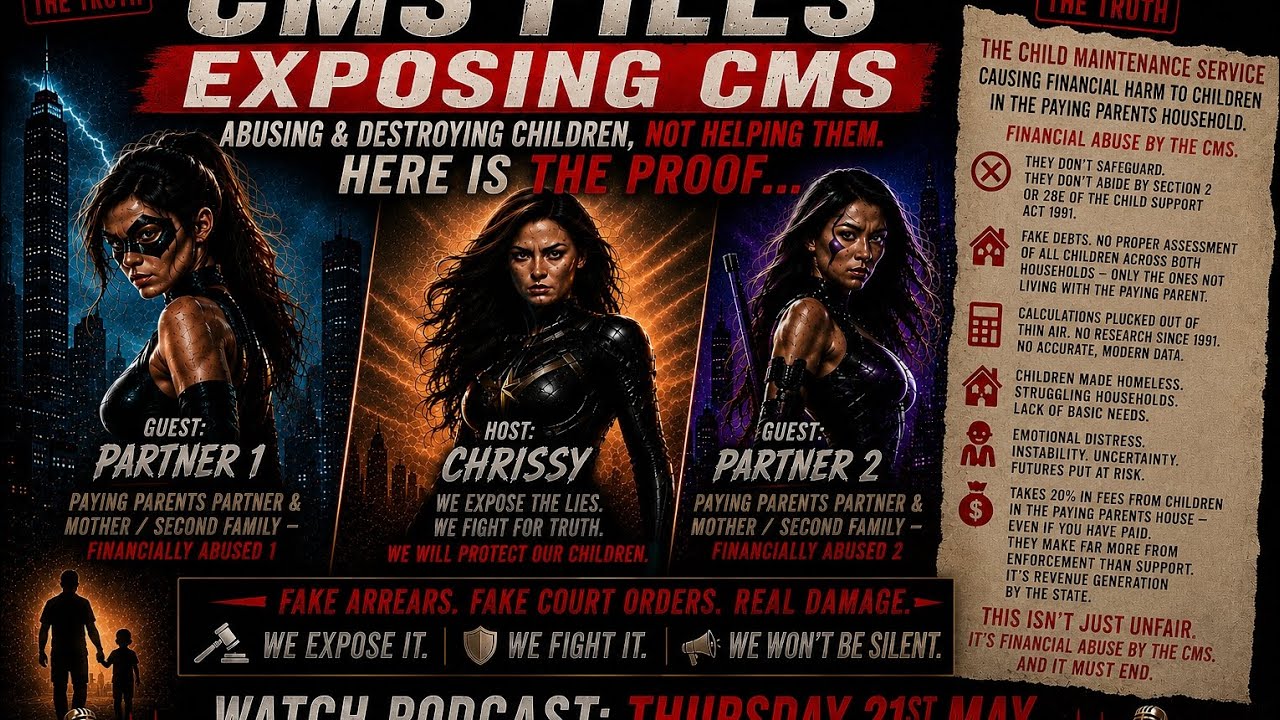
Is the Child Maintenance Service Really Helping Children? A discussion covering reported fake debt, court orders, alleged harm and wider concerns about the CMS.
Parents report incorrect arrears and long struggles to correct mistakes
The page summarises BBC reporting about parents chased for disputed arrears, administrative errors, financial hardship, mental stress, poor complaint handling and correction delays.
Official DWP statistics and the campaign page's linked CSA arrears material provide evidence on arrangements, children covered, compliance and outstanding maintenance.
weak enforcement against parents avoiding payment;
false arrears and wrongful debt recovery;
poor complaint handling;
delayed correction of obvious mistakes;
limited accountability for serious administrative failures.
The campaign's position is that the problem is not child maintenance itself, but a system that may get cases wrong and make those errors extremely difficult to correct.
Parliamentary Petitions Campaigns
Petition 760556
Calculate CMS using both parents' income, including investments
Calls for a review of how financial information from both parents is treated.
Reported Fraud, Corruption and System-Failure Concerns
Allegations and public-interest concerns must be treated as allegations unless independently established.
1. A money-collection system rather than a child-support service
Campaigners report:
maintenance calculated incorrectly;
wrong or outdated income figures;
evidence or disputes being ignored or delayed;
enforcement beginning before investigations finish;
parents feeling treated as guilty before being allowed to defend the calculation.
2. False arrears and "phantom debt"
Disputed arrears may be alleged where:
payments were already made;
private agreements existed;
CMS records were incomplete or incorrect;
administrative errors occurred internally;
historic liability remained active while reassessment was delayed.
3. Harsh enforcement tactics
CMS powers may include:
deductions directly from wages;
deductions from bank accounts;
enforcement-agent or bailiff action;
liability orders;
driving-licence or passport restrictions;
court proceedings and, in extreme cases, imprisonment applications.
Campaigners argue that serious disputes should be investigated before irreversible harm occurs.
4. Private organisations and enforcement incentives
Critics question whether private debt and enforcement arrangements create incentives to escalate cases rather than resolve them, and call for transparent contracts, performance data, complaint outcomes and conflict-of-interest safeguards.
5. Limited accountability
internal complaints may take too long or fail to resolve evidence;
appeals may take months or years;
tribunal processes can be stressful and difficult;
MPs may struggle to obtain timely or complete explanations;
families can feel trapped between CMS, ICE, Ombudsman and tribunal routes.
6. Emotional damage to families
depression and anxiety;
stress-related illness;
housing and debt crises;
family breakdown and reduced contact;
mental-health emergencies and suicidal thoughts in some reported cases.
What campaigners say needs to change
full transparency in calculations and account records;
independent investigation of disputed decisions;
fair review or appeal before enforcement where legally possible;
accountability for incorrect arrears;
review of private enforcement contracts;
equal safeguarding for paying and receiving parents;
a system focused on stable support for children rather than debt collection alone.
Right First Time UK - Opinions and Reform Discussion
A balanced child-maintenance system should recognise the real costs and risks in every household.
Benefits and household income
CMS payments should be considered in discussion of total household resources.
Policy should examine interactions with Universal Credit, Child Benefit and housing support.
Both homes may provide bedrooms, food, clothing, heating, transport and daily support.
Better coordination is needed between CMS, DWP, Universal Credit and housing systems.
Public impact
child poverty and unequal living standards;
financial stress, debt and housing instability;
mental-health pressure and family conflict;
food-bank and crisis-support use;
greater pressure on the NHS, housing, social services and welfare budgets.
Mandatory Reconsideration and tribunal pressure
A Mandatory Reconsideration may follow a complaint, missing evidence, an administrative error or a disputed decision. Families report feeling treated as though a reasoned challenge is simply refusal to accept the system.
Where evidence is not properly reviewed early, cases may proceed unnecessarily to tribunal, creating pressure on:
HM Courts and Tribunals Service;
DWP staff and public funding;
advice organisations and mental-health services;
families already under financial stress.
The Right First Time approach is to recognise errors, review all evidence and correct decisions at the earliest stage wherever possible.
Shared care costs money in both homes
Children may:
sleep and eat in both homes;
need clothes and personal belongings in both homes;
use heating, electricity and water in both homes;
require transport, bedrooms and activities in both homes.
The campaign argues that policy should better recognise genuine shared-care costs rather than treating one household as the only household with substantial expenditure.
Important current legal position
Child maintenance is not normally treated as taxable income.
Child maintenance usually does not reduce Universal Credit directly.
Child Benefit normally goes to one claimant household.
CMS shared-care reductions are mainly linked to overnight stays under current rules.
avoid relying only on a fixed percentage where it creates unsustainable hardship.
A clear, affordable amount may improve compliance, reduce arrears, simplify enforcement, lower administrative costs and reduce conflict.
Overall campaign opinion
The goal should not simply be to maximise a payment. It should be to create stable, affordable and consistent support that works for both households and benefits the child. Shared care should be properly recognised, and neither household should be pushed into severe hardship.
Both Parents on Benefits: Income, Child Support and Costs
Illustrative examples using 2026 to 2027 benefit rates for one child.
Important: Universal Credit is assessed for each household. Housing support, disability elements, carer elements, deductions, sanctions, savings, earnings and the benefit cap can change the final amount. The figures below show basic allowances only and should not be treated as an individual benefit calculation.
Example C: Two parents living together and both relying on Universal Credit
A couple receives one joint Universal Credit standard allowance for the household. They do not receive two separate standard allowances while living together as a couple.
Payment or costMonthly amountYearly amountWhat it is for
Universal Credit couple standard allowance, where either parent is 25 or over
£666.97
£8,003.64
Basic living costs for both adults and the household, not a child-only payment
Universal Credit child element for one child
£303.94
£3,647.28
Extra Universal Credit amount because a child normally lives in the household
Child Benefit for an eldest or only child
About £117.22
£1,406.60
Paid at £27.05 a week to one claimant
Total basic household benefits shown in this example
About £1,088.13
About £13,057.52
Before housing support, additions, deductions or the benefit cap
Total money specifically added because of the child
About £421.16
About £5,053.88
Universal Credit child element plus Child Benefit
£421.16 a monthChild-related public support in this example
£416.67 to £509.26 a monthSimplified basic child-cost estimate based on £90,000 to £110,000 over 18 years
About £0 to £88.10 a monthEstimated basic out-of-pocket gap after child-related support
At the lower end of this simplified cost estimate, child-related benefits are close to the estimated basic cost. At the higher end, the parents would still need to find about £88.10 a month. Actual out-of-pocket costs can be much higher where the family has childcare, additional housing, disability, transport, school, energy or other costs.
Example D: Separated parents who are both on Universal Credit
Where one child moves between two separated households, the benefit system does not normally divide the Universal Credit child element or Child Benefit equally between both parents. Only one Universal Credit claim can normally include the same child at a time, and only one person can receive Child Benefit for that child.
Parent or paymentMonthly amount shownChild-related amountPosition in this example
Parent A: child treated as normally living with them
£424.90 adult standard allowance, plus £303.94 child element, plus about £117.22 Child Benefit
About £421.16 a month
Total before housing and other elements: about £846.06 a month
Parent B: child also stays with them, but is not included on their Universal Credit claim
£424.90 adult standard allowance
£0 from the UC child element and Child Benefit for this same child
May still pay for food, heating, clothes, travel, a bedroom and activities during contact
Possible CMS flat-rate transfer where the paying parent gets qualifying benefits
£7 a week, about £30.33 a month
This is transferred from Parent B to Parent A
It is not additional government support and shared-care rules may change the amount
What this means across two homes
The household treated as the main home may receive about £421.16 a month in child-related public support. The other parent may receive no child element or Child Benefit for that same child, even though they can still have genuine costs when the child stays with them. A CMS flat-rate payment may also reduce the second parent's available benefit income.
Less child-related public support paid to one household
£421.16
£421.16
Simplified remaining cost across the family
£0 in this narrow example
About £88.10 a month
Additional duplicated costs in the second home
Not included. These may include food, heating, transport, clothes, bedding, furniture, internet, activities and keeping suitable sleeping space.
Why this does not mean raising a child is free: The simplified estimate does not fully price childcare, larger housing, disability needs, school trips, replacing furniture, inflation, unexpected costs or duplicated costs across two homes. The adult Universal Credit standard allowance is also intended to meet the parent's own food, energy, clothing and other living costs; it is not entirely available to spend on the child.
Where child costs can exist in both homes
CostMain householdSecond household during shared care or contact
The page contains simplified estimates for discussion. They are not official calculations or financial advice.
Important: These figures are estimates based on simplified assumptions. Actual family costs depend on income, location, housing, childcare, disability, number of children, lifestyle, inflation and future benefit rates.
Example A: Low-income working family receiving Child Benefit and Universal Credit child support
Illustrative itemAmount shown on the campaign page
Headline/media estimate
Around £229,000
Basic realistic spending without paid childcare
£90,000-£110,000 over 18 years
Illustrative Child Benefit and UC child-element support
About £75,000-£80,000 over time
Illustrative out-of-pocket balance
£20,000-£40,000 over 18 years
Illustrative monthly amount
£90-£180
Illustrative weekly amount
£20-£40
Example B: Working family receiving Child Benefit only
Illustrative itemAmount shown on the campaign page
Basic realistic spending
£95,000-£115,000 over 18 years
Illustrative Child Benefit support
Around £24,000 over 18 years
Illustrative family cost after Child Benefit
£70,000-£90,000 over 18 years
Illustrative monthly amount
£325-£420
Illustrative weekly amount
£75-£95
Main everyday costs
food;
clothes and shoes;
school uniform, lunches, trips and supplies;
transport, particularly during teenage years;
phones, internet, social life and activities;
toiletries, household bills and replacement items.
Why headline estimates may be higher
full-time nursery childcare;
larger homes or housing assumptions;
broader minimum-living-standard models;
holidays and extracurricular activities;
vehicle upgrades and higher lifestyle expectations.
Universal Credit and Child Benefit context included on the page
Universal Credit normally reduces as earnings rise after any applicable work allowance.
Savings above £6,000 may reduce Universal Credit.
Savings of £16,000 or more usually prevent entitlement to Universal Credit.
The High Income Child Benefit Charge may require some or all Child Benefit to be repaid at higher individual incomes.
Statistics and report findings presented on the campaign page.
800,000arrangements managed by December 2025
720,000paying parents covered
1.1mchildren covered in Great Britain
70,000Collect and Pay parents reported as paying nothing in March 2025
Lower-income arrears concentration
National Audit Office findings that 46% of paying parents did not earn enough to pay income tax in 2021-22, but accounted for 62% of paying parents with arrears.
Collect and Pay compliance
Cites a House of Lords report stating that around 220,000 paying parents were due to pay through Collect and Pay in March 2025, with around 70,000 paying nothing and many others paying less than due.
What receiving parents report
non-payment and delayed enforcement;
hidden income and self-employment loopholes;
repeated pressure to prove abuse or arrears;
poor case information and long waiting times;
financial abuse and continued coercive control.
Gingerbread's 2024 Fix the CMS work, based on interviews, survey responses and Freedom of Information material, and evidence concerning domestic abuse.
What paying parents report
bias or lack of support for paying parents who are abuse victims;
incorrect income and shared-care assessments;
enforcement before disputes are resolved;
Collect and Pay charges adding 20% for the paying parent;
receiving parents losing 4% under current Collect and Pay charging arrangements.
What this means for children
Child maintenance directly affects poverty, housing stability and household income. Lower family income is associated with poorer health, educational, cognitive and social outcomes. The campaign supports treating maintenance as a children's-rights and parental- responsibility issue while protecting all households from avoidable hardship.
The CSA was launched to enforce child maintenance but became associated with inaccurate assessments, backlogs, IT failures, poor communication and large unpaid arrears.
2008 - CSA replacement process
Following sustained criticism, the agency was replaced through a transition to a new statutory system.
2012 - Child Maintenance Service introduced
CMS was intended to modernise maintenance through a redesigned digital system and stronger enforcement powers.
2012-2025 - continuing concerns
Campaigners and official reports continued to raise arrears, enforcement, incorrect assessments, delays, IT issues, domestic-abuse risks and poor accountability.
Common institutional patterns highlighted
weak accountability and oversight;
regulatory and enforcement failures;
large IT and administrative breakdowns;
delayed responses to evidence and warnings;
underfunding or institutional decline;
loss of public trust.
Public news timeline affecting paying parents
2018-2019: hidden-income investigations and disputes about understanding business accounts.
2020: court challenges and complaints concerning sudden historic arrears demands.
2021-2022: National Audit Office and Public Accounts Committee scrutiny.
2023: domestic-abuse reform and controversy around movement to Collect and Pay.
2024: administrative liability orders and concern that faster enforcement could also accelerate errors.
2025: proposals to remove Direct Pay, with support from some campaigners and concern from others about fees, flexibility and error.
Recurring paying-parent dispute areas
old HMRC income, bonuses, overtime, redundancy or commission;
limited companies, retained profit, dividends, directors' loans and seasonal income;
deductions, bank orders and liability orders before appeals are concluded;
paternity disputes and delayed case correction;
arrears created during delayed reassessment;
Direct Pay records and informal-payment proof;
treatment of redundancy, severance and compensation payments.
The example of an Ombudsman case involving repayment of £8,580.39 after a paternity dispute was not correctly opened for years.
Parliamentary Scrutiny and Reform Timeline
More than a decade of inquiries, debates, legislation, consultation and reports.
2016-2017 - Work and Pensions Committee inquiry
The Committee examined effectiveness and non-payment and later argued that enforcement was too tentative.
reducing the income-change threshold from 25% to 15%;
considering income-producing assets and avoidance structures;
greater protection for domestic-abuse survivors;
improved communication and case information.
Parliamentary discussion does not itself change a family's current calculation. Reforms require implementation, regulation or legislation before they take legal effect.
Scotland - question raised about devolving child maintenance
Steven Bonnar MSP asked whether child maintenance responsibility should sit alongside Scotland's existing responsibilities for family support. First Minister John Swinney responded that there was a strong argument worthy of further consideration.
redundancy or severance payments treated unfairly;
overtime and commission that distort usual earnings;
business income that is misunderstood or assessed inconsistently.
The recurring complaint is that historic income can remain in use even after job loss, reduced hours or a major change in circumstances. Receiving parents, however, may report the opposite problem: current income being understated or hidden.
Self-employment, limited companies and complex finances
Two opposing concerns frequently arise:
receiving parents say some self-employed parents hide or minimise income;
paying parents say CMS does not always understand legitimate business structures.
Disputes can involve:
limited companies;
retained profit;
directors' loans;
dividends;
business reinvestment;
seasonal or irregular earnings;
assets producing income.
A fair system must distinguish genuine business arrangements from deliberate income diversion while explaining the calculation clearly to both parents.
Enforcement while a decision is still disputed
Parents report enforcement action including:
Deduction from Earnings Orders;
deductions from bank accounts;
liability orders;
court proceedings;
passport or driving-licence restrictions;
enforcement-agent action.
Campaigners argue that there is an important difference between refusing to pay and disputing an allegedly incorrect amount. Receiving parents also stress that genuine non-payment requires timely enforcement. Reform must protect both principles.
Paternity disputes and delayed correction
Refers to an Ombudsman example in which a father was repaid £8,580.39 after CMS failed to open and handle a paternity dispute correctly for an extended period. The case is presented as an example of how delay can create substantial financial and emotional harm.
the existing liability continued during the delay;
a large revised balance appeared later without a clear audit trail.
The campaign calls for itemised account histories showing the original figure, every amendment, the reason for each amendment and the officer or automated process responsible.
Direct Pay records and proof of payment
Disputes can arise where parents paid directly but the payment was not recognised, was described differently, or could not be easily linked to a maintenance period.
Useful evidence can include:
bank statements and transfer references;
written agreements;
messages confirming payment or receipt;
CMS schedules and account statements;
court orders or mediation agreements where relevant.
Collect and Pay charges
Under current arrangements, the paying parent may be charged an additional 20%, while the receiving parent may lose 4% from the maintenance transferred. Campaigners question whether charges worsen hardship and whether parents have a meaningful opportunity to avoid Collect and Pay where the underlying debt is disputed.
money disputes damaging relationships with both parents;
feeling treated like a financial figure rather than a person;
being caught between conflicting versions of events;
contact and family relationships being affected by financial conflict.
What a child-focused system should avoid
using children as messengers between parents;
making children feel responsible for maintenance disputes;
creating major inequality between their two homes;
allowing administrative delay to intensify parental conflict;
allowing financial processes to undermine safe and healthy relationships.
The child must remain at the centre
A maintenance system should provide consistent support without encouraging hostility, coercion or disengagement. Children benefit most where accurate decisions, affordable arrangements, reliable enforcement and respectful communication reduce conflict rather than intensify it.
Major Public CMS Issues Reported During the Last Decade
A fuller news and public-discussion summary from the campaign page.
2016-2017: effectiveness and non-payment inquiry
Parliament examined whether CMS was collecting enough maintenance, dealing effectively with non-payment and supporting children. The Committee later criticised enforcement as too tentative.
2018-2019: hidden income and business-account disputes
Public reporting increasingly focused on parents using companies or self-employment to reduce declared income. Paying parents also reported that legitimate business structures were misunderstood or treated inconsistently.
2019: arrears, enforcement and CSA debt write-off
MPs debated the effectiveness of CMS, enforcement powers and historic arrears inherited from the Child Support Agency.
Parents continued to report sudden historic debt, missing payment evidence and difficulty obtaining a full explanation of old balances.
2021-2022: National Audit Office and Public Accounts Committee scrutiny
Official scrutiny considered collection performance, arrears, value for money, the effect on children and the continuing difficulty of enforcing maintenance.
Reform sought to allow victims of domestic abuse to use Collect and Pay without being required to maintain direct financial contact with an alleged abuser.
2024: faster enforcement and administrative liability orders
Government proposed reducing the time taken to obtain liability orders. Supporters welcomed faster action against non-payment; critics warned that faster enforcement must not accelerate action based on an incorrect calculation.
Parents publicly described wrongful arrears, wage and account deductions, aggressive enforcement and cases continuing despite serious disputes. Parliamentary discussion also focused on weak enforcement, hidden income and domestic abuse.
2025: proposal to replace Direct Pay
Government proposed moving toward a CMS-managed payment system. Some campaigners supported stronger visibility of missed payments, while others warned about additional fees, reduced flexibility and more administrative error.
MPs and peers continued to raise poor response times, financial abuse, hidden income, enforcement weakness, calculation errors and the need for wider reform.
"I'm not refusing to pay - I'm disputing the wrong amount."
This distinction is central to many paying-parent complaints. Receiving parents make an equally important distinction between a genuine unresolved dispute and deliberate avoidance. A fair system must be able to identify both.
Reforming the Child Maintenance Service - House of Lords Report
Further detail from the 3rd Report of Session 2024-26, discussed on 8 June 2026.
Problems highlighted
non-paying parents avoiding maintenance;
delays and administrative errors;
difficulty enforcing payments;
financial abuse and coercive control after separation;
poor communication and limited case transparency;
calculations that may not reflect current income or assets.
Reforms discussed
ending or replacing Direct Pay where appropriate;
stronger and faster enforcement;
administrative liability orders;
reviewing the maintenance formula;
reducing the income-change threshold from 25% to 15%;
including income-producing assets or arrangements used to avoid responsibility;
better protection for domestic-abuse survivors.
What changed immediately?
Parliamentary debate and committee recommendations do not by themselves change a family's current maintenance calculation. Some proposals require legislation, regulations, system development or a formal implementation date before they take effect.
This section carries over additional detail, examples and discussion.
Main issues highlighted by Right First Time UK
Shared care costs money in both homes
Children often sleep, eat and use household services in both homes. They may need clothes, bedrooms, heating, electricity, food, transport and activities in both homes. The campaign argues that genuine shared care should receive fair financial recognition.
Child maintenance and benefits interaction
One household may receive CMS, the Universal Credit child element, housing support and Child Benefit, while the other household may still meet significant costs during shared care without receiving the same support. The campaign raises this as an area for policy discussion and reform.
Public impact
poverty and debt;
housing instability and homelessness risk;
mental-health pressure;
greater family conflict;
increased use of food banks and crisis support;
additional pressure on the NHS, housing services, social services and welfare budgets.
Current legal position described on the page
Child maintenance is not normally treated as taxable income.
Child maintenance usually does not directly reduce Universal Credit.
Child Benefit normally goes to one claimant household.
CMS shared-care reductions are mainly based on overnight stays.
These are general statements only. Individual entitlement and liability depend on the current law, regulations and facts of the case.
Mandatory Reconsideration and avoidable tribunal pressure
The page argues that the Mandatory Reconsideration process can cause unnecessary stress and public cost when complaints, administrative errors, missing evidence or flawed decisions are not properly addressed at the earliest stage.
Families may feel forced to proceed to tribunal simply to obtain a full review of evidence or the correction of an obvious error. This can create avoidable pressure on:
HM Courts and Tribunals Service;
DWP staff resources;
public funding;
advice organisations;
mental-health services;
families already under financial stress.
The Right First Time position is that complaints and errors should be recognised properly, evidence should be reviewed fully and avoidable appeals should be prevented by making the correct decision as early as possible.
Cost of raising one child: low-income working family receiving Child Benefit and Universal Credit child support
The original page compares widely reported headline figures with a simplified lower-cost example where there is no paid childcare and the family lives modestly.
ItemIllustrative figure on the original page
Media headline figure
Around £229,000
Estimated basic spending from birth to age 18
£90,000 to £110,000
Estimated Child Benefit and Universal Credit child support
About £75,000 to £80,000
Estimated family out-of-pocket cost
£20,000 to £40,000 over 18 years
Estimated monthly average
£90 to £180
Estimated weekly average
£20 to £40
Most spending in this example is on food, clothing, shoes, school costs, transport and teenage costs. It says higher headline studies may include full-time childcare, larger housing assumptions, holidays, vehicles, activities and broader minimum-living-standard expectations.
Cost of raising one child: working family receiving Child Benefit only
This example assumes the parent works, does not qualify for Universal Credit, receives Child Benefit where eligible, does not use paid childcare and has a basic rather than luxury lifestyle.
ItemIllustrative figure on the original page
Estimated spending from birth to age 18
£95,000 to £115,000
Estimated Child Benefit support
About £24,000 over 18 years
Estimated family cost after Child Benefit
£70,000 to £90,000
Estimated monthly average
£325 to £420
Estimated weekly average
£75 to £95
The page also notes that Universal Credit normally reduces as earnings increase, savings above £6,000 can reduce entitlement and savings of £16,000 or more will usually prevent entitlement. Child Benefit may also be recovered through the High Income Child Benefit Charge.
The figures are simplified estimates, not guaranteed costs for every family. Actual costs may differ because of income, rent, housing, childcare, number of children, region, disability, lifestyle, inflation and future policy changes.
identifies public research on child-raising costs, government benefit rates and simplified budgeting assumptions as the basis of the examples.
avoid relying only on a fixed percentage where it creates an unrealistic or unsustainable amount.
We argue that a clear and affordable amount may be easier to manage, easier to track and more likely to be paid consistently. It may also reduce arrears, enforcement, reassessments, appeals and administrative disputes.
Child equality and shared-care recognition
Children should not experience severe inequality simply because their parents separate. A balanced system should aim to maintain stable support, encourage safe involvement by both parents and avoid pushing either household into severe hardship.
Where genuine shared care exists, both homes can face costs for:
food;
clothes;
heating and electricity;
transport;
bedrooms;
activities and everyday care.
CSA and CMS system history in greater detail
1993: Child Support Agency created
The Government created the Child Support Agency to calculate, collect and enforce child maintenance. It became associated with inaccurate assessments, backlogs, IT failures, weak communication and large unpaid arrears.
2008: replacement of the CSA
The CSA was replaced following years of criticism and official scrutiny. Historic cases and arrears continued to affect families during the transition.
2012: Child Maintenance Service introduced
CMS was intended to modernise child maintenance through a redesigned digital platform and stronger enforcement powers. The campaign argues that delays, incorrect calculations, communication failures, IT concerns and arrears continued.
2012 to 2026: continuing systemic concerns
Parliamentary committees, the National Audit Office, campaign groups and parents have continued to raise non-payment, weak enforcement, disputed assessments, service delays, domestic-abuse risks, Collect and Pay fees and poor accountability.
Paying-parent reports described
Common concerns include:
outdated HMRC income and old tax-year earnings;
one-off bonuses, overtime, commission or redundancy payments being treated unfairly;
limited-company and self-employment income being misunderstood;
maintenance continuing after care arrangements changed;
overnight care being ignored or undercounted;
Mandatory Reconsideration and appeals taking too long;
enforcement continuing before a disputed calculation is corrected;
payments made directly not being recognised.
The repeated statement made by many paying parents is that they are not refusing to support their children, but are disputing an amount they believe is wrong.
Receiving-parent reports described
Common concerns include:
parents hiding income or declaring artificially low earnings;
self-employed parents appearing to pay very little despite a higher lifestyle;
long delays before enforcement action;
arrears building for years;
the receiving parent carrying the burden of proving income avoidance;
maintenance being much lower than the real cost of supporting a child;
the system being used to continue post-separation financial abuse.
Adult children and broader public discussion
Adult children of separated parents have described:
financial instability while growing up;
resentment towards an absent or non-paying parent;
money conflict affecting relationships with both parents;
feeling like a number within the system.
The wider online debate remains heavily divided. Some people argue CMS unfairly targets paying parents. Others argue enforcement is too weak and permits avoidance. Many people on both sides say the bureaucracy escalates conflict rather than resolving it.
Detailed paying-parent dispute areas reported in public discussion
Wrong income calculations
Parents report use of outdated income, old tax years, one-off bonuses, overtime, commission, redundancy payments and misunderstood business income.
Self-employment and limited companies
Receiving parents report hidden income, while paying parents report that legitimate company structures, retained profit, directors' loans, dividends, reinvestment and seasonal income are not always understood correctly.
Enforcement before disputes are resolved
Reports include deductions from earnings, bank deductions, liability orders, licence or passport restrictions and court action before a Mandatory Reconsideration or appeal is completed.
Paternity disputes
The original page refers to an Ombudsman case involving repayment of £8,580.39 after a paternity dispute was not opened and handled properly for years.
Arrears created during delay
Some parents say arrears developed because income updates, reassessments or care changes were not processed promptly while the old liability continued.
Direct Pay evidence
Disputes may occur where bank transfers, private arrangements or other direct payments are not correctly credited to the account.
March 2026 House of Commons debate
Reports that MPs described CMS as fundamentally broken and raised:
post-separation financial abuse;
failures affecting domestic-abuse survivors;
weak enforcement;
inconsistent decision-making;
poor hidden-income investigations;
service delays and unresolved complaints.
The Minister accepted that improvements were needed and referred to plans to reform payment arrangements and safeguards.
The Work and Pensions Committee launched an inquiry into CMS effectiveness and non-payment.
2017
The Committee said CMS was too tentative in its use of enforcement powers and called for improvement.
2019
The House of Commons debated effectiveness, arrears, enforcement and the write-off of historic CSA debt.
2023
The Child Support Collection (Domestic Abuse) Act received Royal Assent.
2023 to 2024
Government consulted on accelerating enforcement for unpaid maintenance.
February 2024
Government announced administrative liability orders intended to reduce enforcement delay from around 22 weeks to around 6 to 8 weeks. The £20 application fee was also removed.
2024
Parliamentary research and debate continued to examine support for domestic-abuse survivors, enforcement and case handling.
2025
Government announced proposals to remove Direct Pay and move towards a reformed payment system.
October 2025
The House of Lords Public Services Committee published Reforming the Child Maintenance Service, calling for fairer calculations, stronger enforcement and better communication.
2026
MPs and peers continued raising delays, poor response times, enforcement, abuse safeguards and wider reform.
House of Lords reform report and June 2026 discussion
The report and debate highlighted:
non-paying parents avoiding maintenance;
administrative delay and error;
post-separation abuse and coercive control;
difficulty enforcing payments;
poor communication and accountability.
Government reform areas discussed included:
ending or replacing Direct Pay where appropriate;
stronger enforcement and administrative liability orders;
reviewing the calculation formula;
reducing the income-change threshold from 25 per cent to 15 per cent;
considering income-producing assets and arrangements used to avoid responsibility;
strengthening protection for domestic-abuse survivors.
No change occurs merely because a committee publishes a report or Parliament holds a debate. Reforms may require legislation, regulations, system changes and an implementation date.
This refers to parliamentary committee material from 15 June 2011 and 25 April 2012 concerning historic arrears, development of the replacement IT system and the introduction of Collect and Pay charges.
Campaigners question whether the system has delivered value for money and whether audit records are sufficient to identify every change, deletion, reassessment and enforcement decision.
The page also refers to campaign discussion of reported CMS IT expenditure of around £1.2 billion. This should be read as campaign commentary unless confirmed against an official audited source.
This includes coverage in which fathers described aggressive pursuit by CMS and compared the scale of alleged failure to the Post Office scandal. Issues raised included:
wrongful arrears;
aggressive enforcement;
deductions from wages or accounts;
poor investigation of evidence;
parents being chased for disputed debt;
emotional and financial pressure on families.
It also includes material about Stephen Timms leading a 2024 debate concerning enforcement, hidden income, domestic abuse, inconsistent decisions and protection for vulnerable families.
Scotland and possible devolution of child maintenance
Steven Bonnar asked whether responsibility for child maintenance should sit in Scotland alongside devolved family, education and social-security responsibilities. First Minister John Swinney said there was a strong argument worthy of further consideration so that support for children and families could be more integrated.
Right First Time UK is an independent public-interest and awareness initiative. The information, opinions and statements on this page are intended for public discussion, research, campaigning and education.
Nothing on this page is legal advice, financial advice, regulated welfare advice or professional representation. Sending material to the campaign does not start a CMS complaint, Mandatory Reconsideration or tribunal appeal and does not stop a legal deadline.
CMS, DWP, HM Courts and Tribunals Service, Universal Credit, Child Benefit and housing benefits operate under current legislation and regulations. Views concerning unfairness, system failures, complaints, financial hardship and administrative errors are public-interest commentary based on reported experiences, public documents, tribunal outcomes and government data.
Right First Time UK does not accuse an individual, staff member, organisation or authority of criminal wrongdoing unless that wrongdoing has been established by a court or other competent authority.
Users should obtain independent support where needed from Citizens Advice, an accredited welfare adviser, a solicitor or another appropriately qualified professional.
Content must comply with the Defamation Act 2013, Data Protection Act 2018, Human Rights Act 1998, Equality Act 2010 and Freedom of Information Act 2000.
The BBC is asking parents and families affected by the Child Maintenance Service (CMS) to share their experiences. If you've experienced calculation errors, affordability problems, enforcement issues, delays, poor communication or other difficulties with the CMS, your story could help inform future BBC reporting.
BBC Panorama is interested in hearing from people with first-hand experience of the Child Maintenance Service. If you have evidence, documents or experiences you believe are in the public interest, you can contact the Panorama team directly.
BBC Your Voice collects experiences from members of the public. If you've experienced problems with the Child Maintenance Service, calculations, enforcement, affordability or other issues, you can share your experience.
Only provide truthful information based on your own experience.
Remove children's names and identifying details.
Remove addresses, bank details, National Insurance numbers and CMS reference numbers.
Do not send confidential Family Court documents unless you have taken appropriate legal advice.
Clearly explain what happened, when it happened and how it affected you.
Your Story Could Help Others
Every personal experience helps journalists build a clearer understanding of how the Child Maintenance Service is operating. If you've been affected, consider contacting the BBC and sharing your experience.
Right First Time UK
Supporting transparency, accountability and public awareness of the Child Maintenance Service.
Independent CMS campaign resource
The CMS Files
The Child Maintenance Service (CMS) - Fraud, Corruption and System Failure
Independent research, investigations, campaign information and videos examining the Child Maintenance Service, disputed debt, enforcement, court processes, technology costs and the impact on children and separated families.
Independent resource disclaimer: The CMS Files is an independent campaign and information resource. The views, opinions, allegations, evidence and conclusions presented belong to its creators and contributors. Right First Time UK shares these links to support awareness and public discussion. Inclusion does not mean that every statement has been independently verified or formally accepted by a court, tribunal, government department or regulator.
About The CMS Files
Designed to be Broken
The CMS Files brings together campaign research, public information, personal experiences, videos and investigations concerning the operation of the Child Maintenance Service.
Subjects covered include alleged false or disputed debt, court and enforcement concerns, complaint handling, administration, technology systems, financial expenditure and the effects unresolved CMS cases may have on parents, children and wider families.
The CMS FilesResearch, evidence and public awareness
Featured Videos
Select a video below to watch it directly on YouTube.
Is the Child Maintenance Service Really Helping ChildrenOPEN ON YOUTUBE
(CMS campaign image)
Is the Child Maintenance Service Really Helping Children?
A discussion examining whether the Child Maintenance Service is meeting its intended purpose and how its operation may affect children, paying parents, receiving parents and separated families.
Fraud, Corruption and System Failure - Designed to be Broken
A video discussing allegations and concerns raised by campaigners about administration, governance, accuracy, enforcement and wider systemic failures within the Child Maintenance Service.
CMS Files Exposing the Child Maintenance ServiceOPEN ON YOUTUBE
(CMS campaign image)
CMS Files - Exposing the Child Maintenance Service
A video focused on allegations involving fake or disputed debt, court-order concerns and the real-world harm that campaigners say families have experienced.
The CMS Files also discusses reported expenditure connected with Child Maintenance Service technology and IT systems.
The subject raises questions about procurement, system development, reliability, auditability, value for money and whether substantial technology spending has produced an accurate and accountable service for families.
The CMS Files examines a wide range of issues connected with the Child Maintenance Service and its effect on families.
CMS Administration
Decision-making, case handling, communication, complaints and the accuracy of account information.
Debt and Arrears
Alleged false or disputed debt, historic arrears, account changes and the evidence used to calculate liability.
Court and Enforcement
Court processes, liability orders, enforcement action, deductions and concerns raised about procedural fairness.
Technology and IT
System costs, procurement, technical failures, audit trails and questions about value for public money.
Family Impact
Experiences shared by paying parents, receiving parents, children and wider family members.
Evidence and Documents
Campaign material, correspondence, reports, public records and supporting documents connected with CMS concerns.
Why These Resources Matter
Independent campaign material can help bring together experiences and information that may otherwise remain separated across individual cases.
Public Awareness
Videos and research can help the public understand the concerns being raised by families and campaigners.
Evidence and Accountability
Documents and detailed case information can support wider scrutiny of decision-making, administration and enforcement.
Shared Experiences
Families can compare experiences and identify concerns that may be part of a wider pattern rather than an isolated problem.
Reform Discussion
Campaign resources can contribute to informed discussion about how the Child Maintenance Service could be made fairer, more accurate and more accountable.
Explore The CMS Files
Visit the independent CMS Files website or watch the featured videos to explore the research, concerns and experiences being raised about the Child Maintenance Service.
Support current petitions calling for greater fairness, transparency and reform of the Child Maintenance Service.
Current Notable Petitions
Select a petition below to read the full proposal and add your signature directly through the official UK Parliament petitions website.
Petition 760556
Review CMS to be calculated on both parents’ income, including investments
Calls for a review of how Child Maintenance Service calculations are made, including consideration of both parents’ income and relevant investment income.
Reform Child Maintenance Service payment calculations to reflect net pay and affordability
This independent petition calls for Child Maintenance Service calculations to better reflect a paying parent's actual net income, affordability and essential living costs, with the aim of creating a fairer and more sustainable maintenance system for families.
Review the Child Maintenance Service and improve fairness
An official UK Parliament petition calling for changes to the Child Maintenance Service. Read the full petition on the Parliament website for complete details of the proposal and support it if you agree.
Every signature helps demonstrate public concern. Please read each petition carefully, sign those you support and share this page with other families, campaigners, MPs and community groups.
Important: Right First Time UK is independent public-interest and is not part of or officially connected with the UK Parliament or the Child Maintenance Service. Petition wording, status, signature totals and closing dates are controlled by the official UK Parliament petitions website.
We need your consent to load this module
The script in this module may collect data about your activity. Please review the details and accept the service to view the content.
It takes about a minute, and feedback can be left anonymously.
Cookie choices
Our existing RFTUK website statistics system helps us understand site use. Google Analytics 4 is an additional, optional tracker and only loads if you allow analytics cookies. You can change your choice at any time. Read the Cookie Policy.
Essential cookies Required for security and core site functions.
Always on
Google Analytics / improvement cookies Optional Google Analytics 4 measurement, enabled only with your consent.